Brands
Showing 12 of 270

Industrial Injection
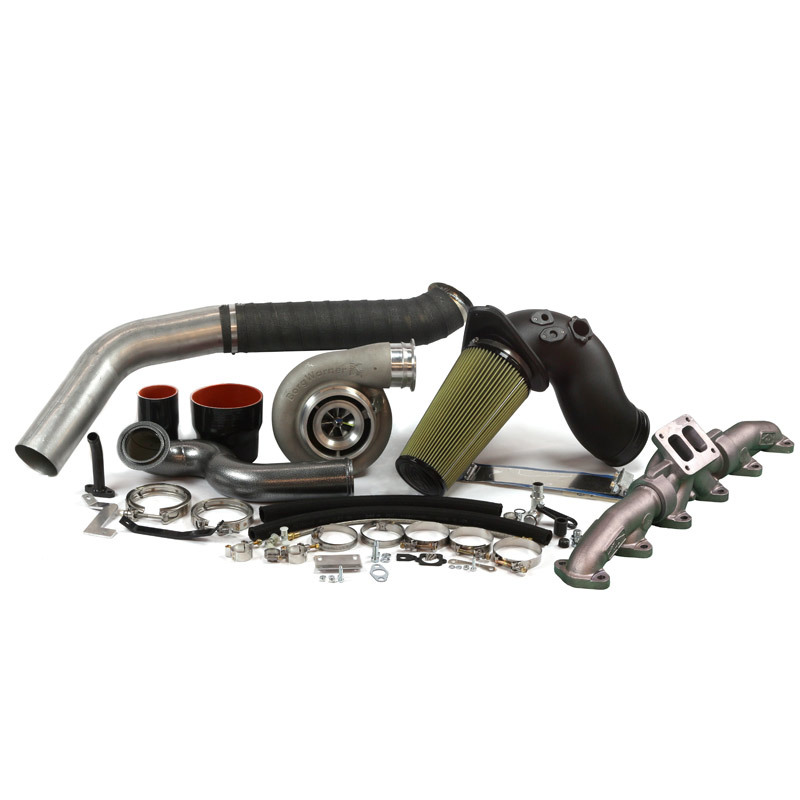
2010-2012 6.7L Dodge S300 SX-E 63/74 With 1.0 A/R
$3,146.95
$3,052.54
Industrial Injection
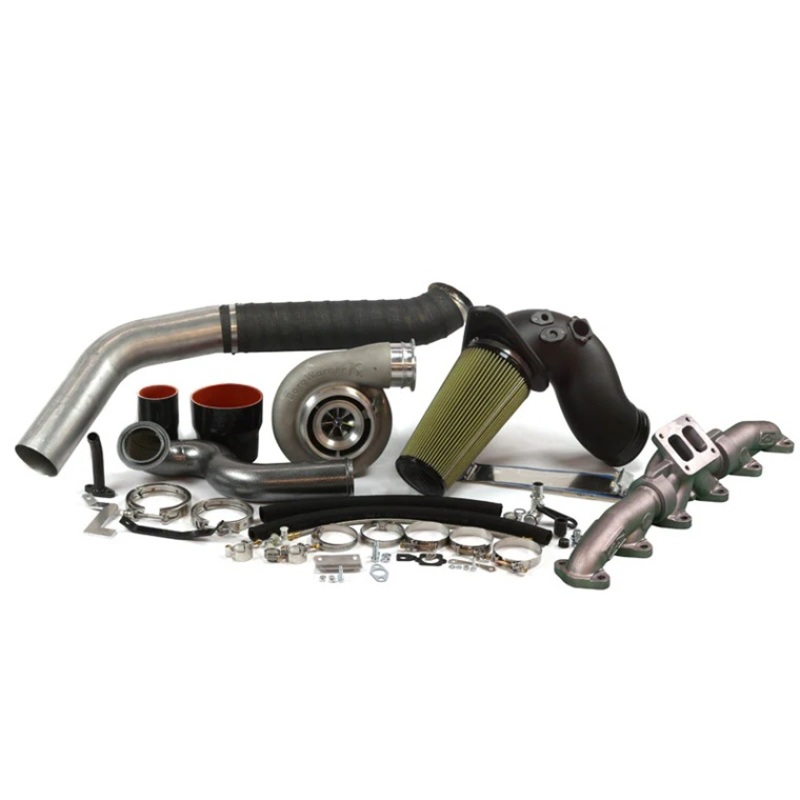
2010-2012 6.7L Dodge S300 SX-E 64/74 With .91 A/R
$3,146.95
$3,052.54

Industrial Injection
2010-2012 6.7L Dodge S300 SX-E 64/74 With 1.0 A/R
$3,146.95
$3,052.54

Industrial Injection
2010-2012 6.7L Dodge S300 SX-E 66/74 With .91 A/R
$3,436.95
$3,333.84

Industrial Injection
2010-2012 6.7L Dodge S300 SX-E 66/74 With 1.0 A/R
$3,146.95
$3,052.54
Industrial Injection
2010-2012 6.7L Dodge S300 SX-E 69/74 With .91 A/R Single Turbo Kit
$3,146.95
$3,052.54

Industrial Injection
2010-2012 6.7L Dodge S300 SX-E 69/74 With 1.0 A/R
$3,213.95
$3,117.53
Industrial Injection
2010-2012 64MM 6.7L TURBO KIT
$3,255.95
$3,158.27

Industrial Injection
2010-2012 DODGE S467 WITH STANDARD COVER AND
$3,514.95
$3,409.50

Industrial Injection
2010-2012 Dodge S467 w/Standard Cover
$3,514.95
$3,409.50
Industrial Injection
2010-2012 Dodge S471 w/.90 Turbine A/R Turbo Kit
$3,290.95
$3,192.22
Industrial Injection
2010-2012 Dodge S471 w/1.00 Turbine A/R Turbo Kit
$3,392.95
$3,291.16
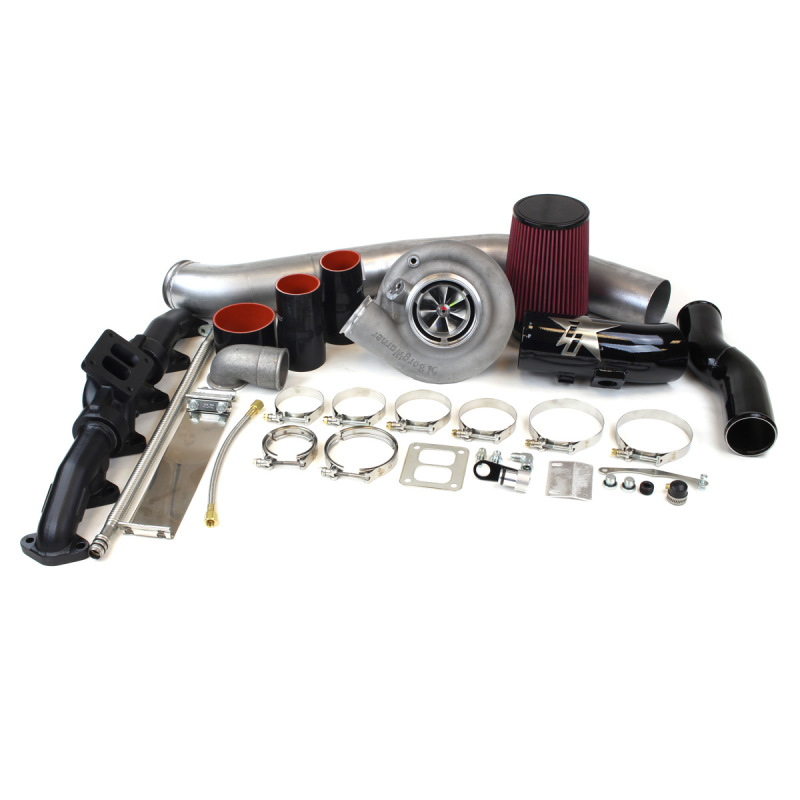
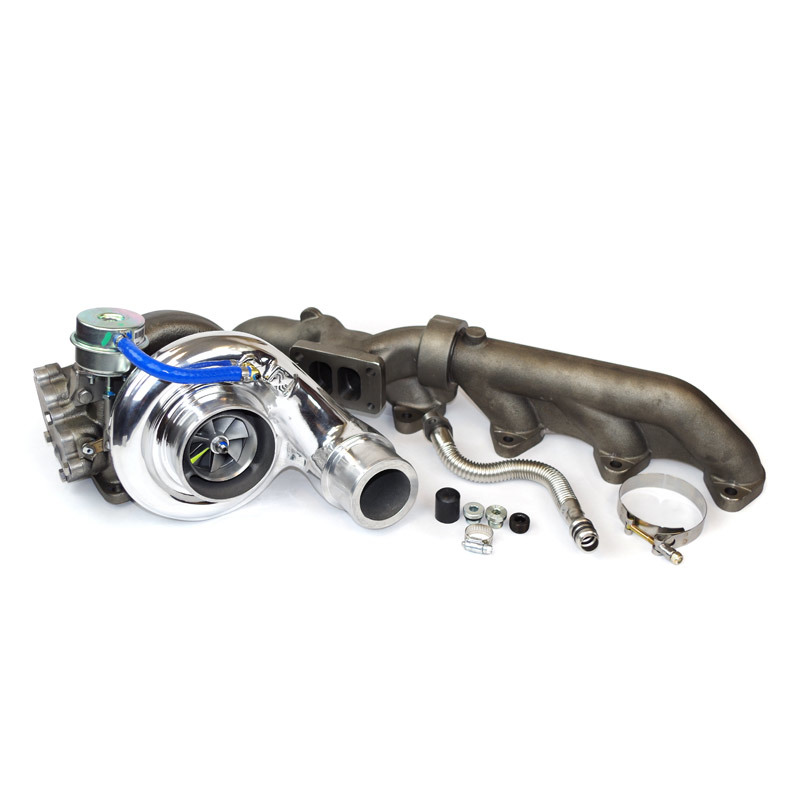
A turbo kit brings everything together: the turbocharger, manifold or headers, downpipe, charge plumbing, oil lines, and boost control hardware engineered to fit your vehicle. Choose a kit to add a turbo to a naturally aspirated engine, convert a factory turbo engine to a larger single turbo, or build a compound setup on a diesel. We cover Cummins, Duramax, Power Stroke, LS, Coyote, EcoBoost, Hemi, Subaru, Miata, Honda, naturally aspirated, and NA to turbo. Contents vary between kits, so check what's included, and plan for the supporting mods most kits require, such as tuning and fuel upgrades. Kits are vehicle specific, so shop by year, make, model, and engine to find one engineered for your exact application.
Most kits include the turbo, a turbo manifold or headers, a downpipe, charge pipes, oil feed and drain lines, and mounting hardware. Many also include an intercooler, wastegate, and blow off valve. Some go further with fuel components or a base tune, while others leave fuel and tuning to the buyer. Compare contents carefully, since two kits at different prices may cover very different parts of the build.
Turbo Kits can include:
Turbo kit questions usually come down to what the kit includes, what else the build needs, and what can go wrong after installation. The answers below cover the most common turbo kit problems, such as lean conditions, boost leaks, oil leaks, and heat damage, plus whether you need a tune and how to choose between single, twin, and compound kits. Because turbo kits are vehicle specific, confirm fitment for your exact year, make, model, and engine on each product page before you buy. For help planning a turbo kit build, talk with your tuner or contact our team.
Yes, in almost every case. Adding boost changes airflow, fueling, and timing needs, and running a kit without a proper tune risks detonation and engine damage.
Many engines handle moderate boost on stock internals with proper tuning and fueling. Higher power goals commonly require forged internals, head studs, and other upgrades.
Common causes include fuel injectors or a fuel pump that can't supply enough fuel, a tune not matched to the kit, or a boost leak. A lean condition under boost can quickly damage an engine.
A restricted oil drain is a common cause. The drain line needs a steady downward slope with no kinks, and high crankcase pressure can also push oil past the seals.
Yes. Tubular manifolds can crack from heat cycling and vibration if they aren't supported properly. Cast manifolds are commonly more resistant.
A single turbo kit is typically simpler to install and tune. A twin turbo kit can spool quickly on V engines but adds complexity.
Only if a CARB EO number is listed for that kit and vehicle. Otherwise they're for off-road and competition use only.