Product Description
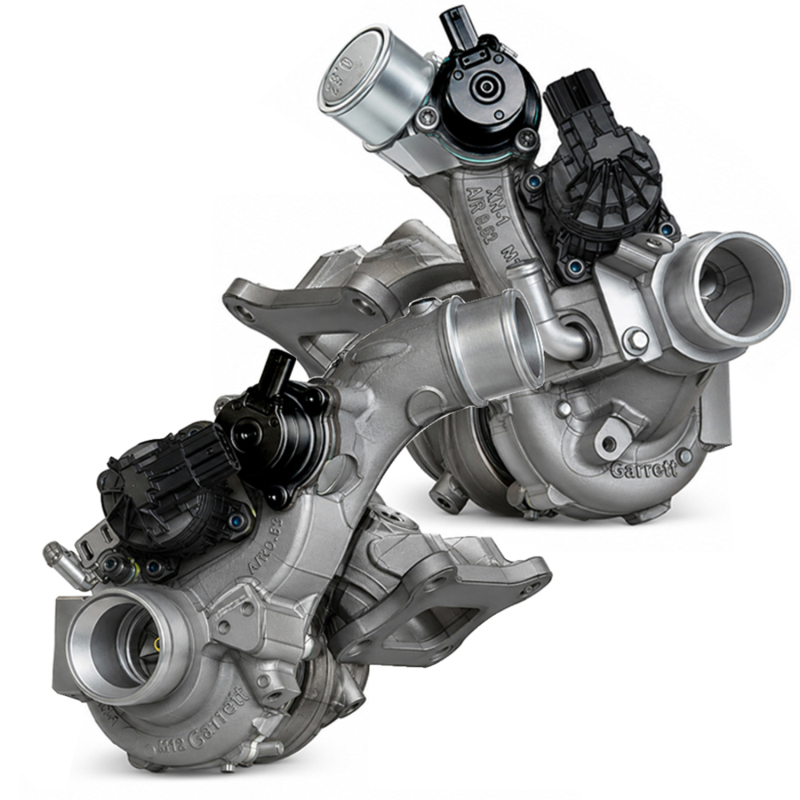
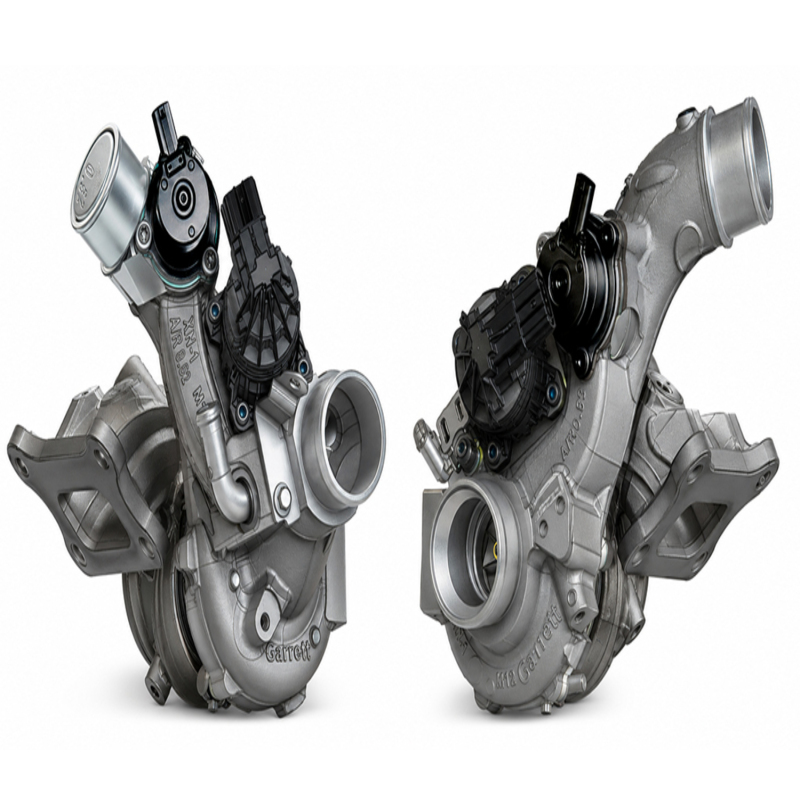
Garrett MGT1446Z performance turbocharger for the 2023-2027 Nissan Z 3.0L V6, rated 560 hp. Internal wastegate with included electronic actuator, aluminum compressor housing, stainless steel turbine housing, MAR-M alloy turbine wheel.
Power on a boosted engine starts with how much air the turbocharger can move. The Garrett MGT1446Z, part number 959782-5001S, is a performance-grade turbocharger rated at 560 horsepower and cataloged for the 2023-2027 Nissan Z with the 3.0L V6 engine. It gives tuners, builders and professional technicians a precisely specified turbo to build around, with the key dimensions published up front. On the compressor side, a 36 mm inducer and 46 mm exducer sit inside a 0.52 A/R aluminum housing with a hose barb outlet for straightforward connection to charge-air plumbing. On the turbine side, a 39 mm inducer and 36 mm exducer are paired with a 0.53 A/R heat-resistant stainless steel housing, and the turbine wheel is made from MAR-M alloy, a high-temperature material suited to the exhaust side. Boost is managed by an internal wastegate under electronic control, and the electronic wastegate actuator is included, so the core control hardware arrives with the turbocharger. With no vacuum ports and a bolt-on turbine inlet flange, installation relies on an electrical actuator connection and a flange-style exhaust joint rather than vacuum lines. The compressor housing is uncoated silver aluminum and the turbine housing is uncoated gray stainless steel. Garrett model number MGT1446Z makes it easy to cross-check this turbocharger at purchase and during service.
Performance Turbocharger - MGT1446Z - Electronic Wastegate Actuator Included
Features and Benefits
- 560 hp rating gives builders and tuners a clearly defined power target when planning a high-output build on the 2023-2027 Nissan Z 3.0L V6.
- Included electronic wastegate actuator means the key boost-control component arrives with the turbocharger, so there is no separate actuator to source or match.
- MAR-M alloy turbine wheel is a high-temperature material suited to the exhaust stream, supporting durability when the turbo is run under sustained boost.
- Heat-resistant stainless steel turbine housing is built for hot exhaust gas and resists the repeated heat cycling that turbocharged applications create.
- 0.52 A/R compressor housing and 0.53 A/R turbine housing publish the flow characteristics up front, letting tuners match the turbo to airflow and power goals.
- Internal wastegate design keeps boost-control plumbing compact, with no external wastegate to mount and no vacuum lines to route.
- Aluminum compressor housing with a hose barb outlet simplifies the connection to charge-air hoses and clamps while keeping weight down.
- Bolt-on turbine inlet flange provides a secure, flange-style connection to a compatible exhaust manifold.
- Identified by Garrett model number MGT1446Z and part number 959782-5001S, giving buyers verifiable identifiers to cross-check before purchase and when ordering service parts.
Applications
- 2023-2027 Nissan Z 3.0L V6
Notes
Turbocharger housings reach extremely high temperatures during operation and remain hot after shutdown. Allow the unit to cool fully before handling to avoid severe burns.
Route fuel lines, wiring and hoses away from the turbine housing and exhaust components. Contact with these hot surfaces can melt hoses and wiring or ignite leaking fluid, resulting in a fire or component failure.
Cataloged for the 2023-2027 Nissan Z with the 3.0L V6 engine (2997 cc). Confirm your vehicle's model year and engine, and compatibility with your exhaust manifold flange, intake plumbing and engine control or boost control system, before ordering.
The product data lists the turbocharger with its electronic wastegate actuator. Gaskets, oil feed and drain lines, and charge-air hoses and clamps are not listed as included; confirm what your installation requires before starting work.
The 560 hp rating is a catalog specification for this turbocharger; actual power depends on the engine, fuel, tuning and supporting modifications.
Turbine inlet uses a bolt-on flange and compressor outlet is a hose barb type. Confirm that the exhaust manifold flange and charge-air hose and clamp sizes in your application match these connections before installation begins.
This turbocharger has no vacuum ports and the wastegate is controlled electronically, so plug in the actuator electrical connector until fully seated and secure the wiring before first start.
Refer to the vehicle or engine manufacturer's service information for correct fasteners, torque values and oil feed and drain line routing for your specific application.
Technical Tips
A turbocharger only delivers its potential when the engine and supporting systems are prepared to match it. The tips below cover the areas that most often decide a successful installation: correcting the cause of any previous turbo failure, protecting the bearings with clean oil and a clear oil drain, keeping debris out of both housings, sealing the intake and exhaust paths, and confirming the electronic wastegate control setup. Because the Garrett MGT1446Z includes an electronic wastegate actuator and has no vacuum ports, boost control depends on a correct electrical connection and calibration rather than a vacuum line, so controller setup deserves careful attention. Following these recommendations helps technicians and enthusiasts reduce comebacks and protect the turbocharger from avoidable damage at first start-up and in the miles that follow.
Before installing, find and correct the root cause of any previous turbocharger failure, such as oil starvation, contaminated oil, or ingested debris, or the replacement unit may fail the same way.
Use fresh engine oil and filter and confirm the oil feed line is clean and unrestricted, since the turbo bearings depend on a steady supply of clean oil.
Verify the oil drain path is open and unobstructed so oil can return freely to the pan; a restricted drain can cause oil to back up into the turbocharger and leak past the seals.
Keep the compressor inlet, compressor outlet, turbine inlet and turbine outlet covered until the moment of installation, and inspect the intake and exhaust paths for debris that could damage the wheels.
Use new gaskets and fasteners at the turbine inlet flange and make sure mating surfaces are clean and flat to prevent exhaust leaks that reduce turbine efficiency.
Secure the hose barb compressor outlet connection with appropriate clamps and check all charge-air connections for leaks, since boost leaks reduce performance and can mask other problems.
Pre-lubricate the turbocharger with clean engine oil through the oil inlet before first start so the bearings are not run dry during initial start-up.
Confirm the electronic wastegate actuator is connected and that the engine controller or boost control setup is calibrated for this turbocharger before applying full boost.
After the first start, let the engine idle briefly and check for oil and exhaust leaks before driving under load.
After hard driving, allow a short idle cool-down before shutting off so the turbocharger is not stopped while still extremely hot.
⚠️ California Proposition. This product contains chemicals known to the state of California to cause cancer and birth defects or other reproductive harm. For more information: https://www.p65warnings.ca.gov/