Product Description
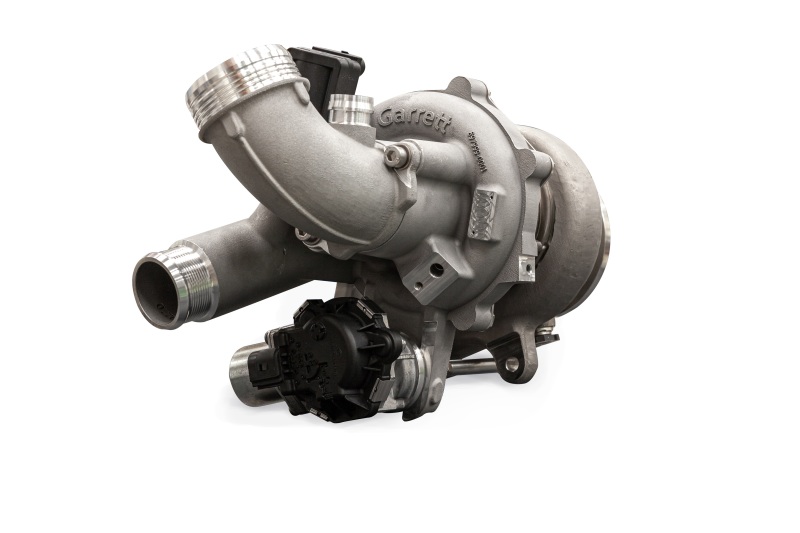
Fixed-geometry G25-660 turbo with ball bearing, water-cooled center housing, stainless steel turbine housing, Mar-M alloy turbine wheel, aluminum compressor housing, internal wastegate and electronic actuator. Supports up to 600 hp.
When Stage 1 is no longer enough, the Garrett PowerMax Stage 2 turbocharger is designed to take a turbocharged Volkswagen or 2.0L platform to the next level. Built around Garrett's G25-660, it supports up to 600 horsepower and installs in the factory turbo location on the Volkswagen Golf, GTI, Golf R and Golf Alltrack and the Audi A3, S3, TT and TTS. G-Series compressor aerodynamics flow 59% more than the IS38 turbo on a stock Golf R, giving big-power builds the air they need. The Mar-M alloy turbine wheel and stainless steel turbine housing are both rated to 1050°C, so the turbo stays strong under sustained boost and high exhaust temperatures. A ball bearing rotor group in a water-cooled center housing delivers quick spool and sharp response, so the added airflow does not cost you drivability. The turbo arrives fully assembled with its internal wastegate and calibrated electronic actuator, plus the ancillary components needed for direct OE-style fitment. A fully machined speed sensor port lets you monitor shaft speed (sensors sold separately). Stage 2 is designed for fully supported builds, so plan on a custom tune along with fueling, intercooling, and engine upgrades to match your power goals. Garrett's own test car ran an upgraded intercooler and fuel system, reinforced pistons, and high-octane or ethanol-blend fuel. Horsepower is estimated from compressor choke flow, so actual results depend on your modifications and tuning. Garrett Performance products are intended for racing vehicles that are never driven on public roads. This turbocharger is backed by a 1-year warranty.
Garrett G25-660 Turbocharger - Stage 2 PowerMax, Water-Cooled Ball Bearing
Features and Benefits
- Supports up to 600 horsepower, estimated from compressor choke flow, giving fully supported Stage 2 builds airflow headroom well beyond Stage 1 levels
- G-Series compressor flows 59% more than the IS38 turbo on a stock Golf R, so big-power builds get the airflow they need
- Mar-M alloy turbine wheel in a stainless steel turbine housing, both rated to 1050°C, to withstand sustained boost and high exhaust temperatures
- Ball bearing rotor group in a water-cooled center housing spools quickly and responds sharply, so the larger turbo remains drivable
- Direct-fit design installs in the factory turbo location, so no custom turbo fabrication is required
- One turbo covers every listed application, replacing the factory IS12, IS20 or IS38 on Golf, GTI, Golf R, Alltrack, A3, S3, TT and TTS models
- Arrives fully assembled with internal wastegate, calibrated electronic actuator and the ancillary parts needed for OE-style fitment, so it is ready to install
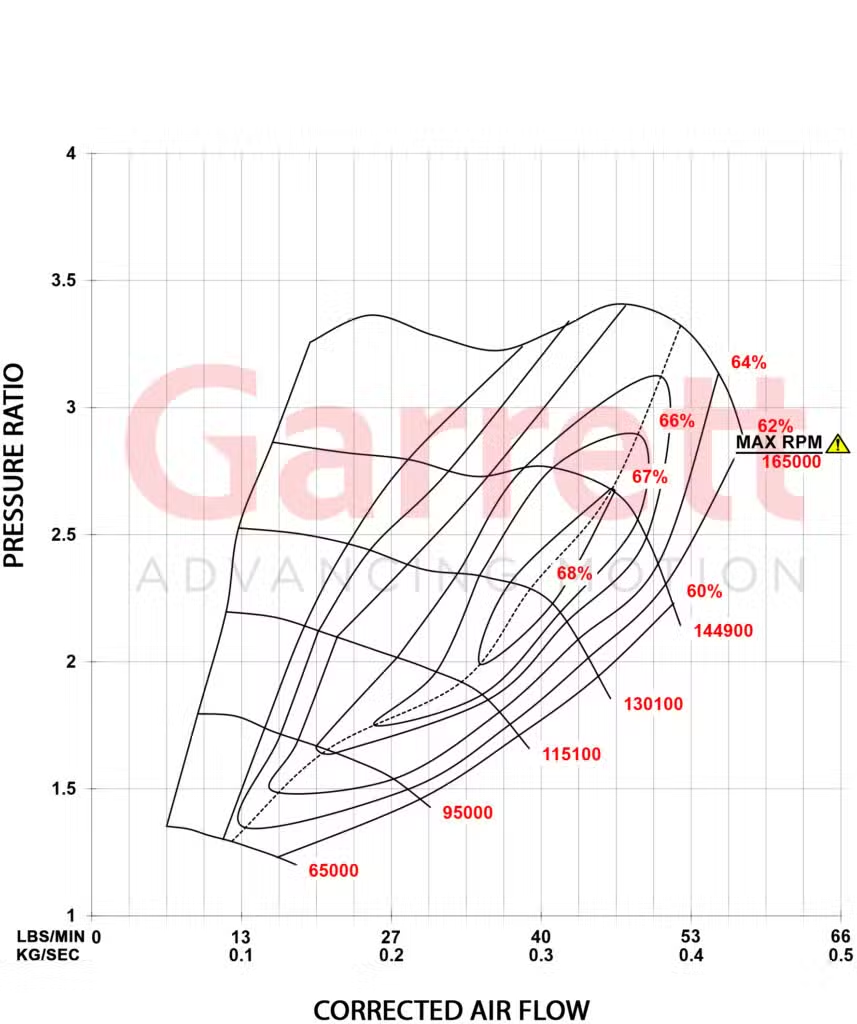
- Fully machined speed sensor port allows shaft speed monitoring, helping you keep the turbo within its 165,000 RPM limit (sensor sold separately)
- Backed by a 1-year warranty for added confidence in your Stage 2 build
Applications
- 2015-2016 Audi A3 1.8L 4-Cylinder Turbocharged
- 2017-2018 Audi A3 2.0L 4-Cylinder Turbocharged
- 2015-2018 Audi A3 Quattro 2.0L 4-Cylinder Turbocharged
- 2014-2018 Audi S3 2.0L 4-Cylinder Turbocharged
- 2014, 2016-2018 Audi TT 1.8L 4-Cylinder Turbocharged
- 2014, 2016 Audi TT 2.0L 4-Cylinder Turbocharged
- 2014-2018 Audi TT Quattro 2.0L 4-Cylinder Turbocharged
- 2014-2018 Audi TTS Quattro 2.0L 4-Cylinder Turbocharged
- 2015-2018 Volkswagen Golf 1.8L 4-Cylinder Turbocharged
- 2017-2018 Volkswagen Golf Alltrack 1.8L 4-Cylinder Turbocharged
- 2015-2018 Volkswagen Golf R 2.0L 4-Cylinder Turbocharged
- 2014 Volkswagen GTI Wolfsburg Edition 2.0L 4-Cylinder Turbocharged
- 2015-2018 Volkswagen GTI 2.0L 4-Cylinder Turbocharged
Notes
Operating this turbocharger without a proper custom tune and matching fueling, intercooling, and engine upgrades can result in engine or turbocharger damage. Have the vehicle tuned and calibrated by a qualified professional before running at boost.
Do not exceed the maximum turbo shaft speed of 165,000 RPM. Over-speeding the turbocharger can cause component failure. Monitor shaft speed with a compatible speed sensor (sold separately).
Garrett Performance products are intended for racing vehicles that are never driven on public roads. Check applicable emissions and equipment regulations in your area before purchasing or installing this turbocharger.
This turbocharger replaces the factory IS12, IS20 or IS38 turbo depending on application. Verify your vehicle's year, model, and engine against the fitment data before ordering.
Turbine outlet uses a V-band flange and the turbine inlet is a bolt-on flange. Verify that your exhaust manifold and downpipe connections are compatible with these flange types, especially when using aftermarket exhaust components.
Speed sensors are not included. The housing has a fully machined speed sensor port so a compatible sensor (sold separately) can monitor turbo shaft speed.
The 600 horsepower rating is calculated from the choke flow of the compressor map (total turbocharger capability) and represents potential flywheel power. Actual results depend entirely on your vehicle's modifications and tuning/calibration.
Keep the compressor, turbine, oil and coolant ports capped until installation, and inspect the intake tract and charge piping for debris before fitting the turbo. Foreign objects can damage the compressor wheel at boost.
Inspect the oil feed line and drain path for restrictions or sludge before installation, and prime the turbo with clean engine oil before first startup. Restricted or absent oil supply can quickly damage the ball bearing rotor group.
Connect the water-cooled center housing to the engine cooling circuit using the vehicle's original coolant routing, and bleed air from the cooling system after installation so the bearing housing receives full coolant flow.
The electronic wastegate actuator arrives calibrated. Avoid lifting or supporting the turbocharger by the actuator or its linkage during handling and installation to help protect the calibration.
Install the turbo using the ancillary components supplied for OE-style fitment, and follow the vehicle manufacturer's procedure and torque specifications for the turbo mounting hardware and downpipe connection.
Technical Tips
A Stage 2 turbocharger delivers its full potential only when the entire system is prepared to support it. The Garrett PowerMax G25-660 is designed for fully supported builds, so the technical tips below focus on what most influences turbo life and performance: oil and coolant supply, a debris-free intake and exhaust path, compatible exhaust flanges, and a proper tune. Because the turbo pairs a ball bearing rotor group with a water-cooled center housing, clean oil and a properly bled cooling system are especially important to bearing life. With a maximum turbo speed of 165,000 RPM and support for up to 600 horsepower, matching fueling, intercooling, and a professional custom tune are what turn the hardware into dependable power. These recommendations draw on the turbocharger's design and the configuration Garrett used in its own Stage 2 test car, and they are meant to help professional installers and experienced enthusiasts avoid comebacks and achieve consistent results.
If replacing a failed turbo, identify why it failed, such as oil starvation, contamination, or intake debris, so the same cause does not damage the new Garrett turbocharger.
Inspect the intercooler and charge piping for oil residue or debris from the previous turbo and clean or replace them as needed, since contamination can carry into the new compressor.
Install fresh engine oil and a new oil filter with the turbo to give the ball bearing rotor group clean lubrication from the first start.
Make sure the V-band clamp and flange faces are clean and seat evenly before final tightening, since a leaking exhaust joint wastes energy that the turbine needs to build boost.
After first startup, idle the engine and check the oil feed, oil drain, coolant, and exhaust connections for leaks before test driving, then recheck coolant level once the engine has cooled.
Have the ECU calibrated by a professional tuner before sustained high-load driving, and verify boost control and air-fuel ratios under load so the tune matches the airflow of the larger turbo.
Use high-octane or ethanol-blend fuel, as Garrett's test car did, to give the tune more knock margin at the higher boost levels this turbo supports.
Log turbo shaft speed with a compatible sensor in the machined port during tuning to confirm the turbo stays below its 165,000 RPM maximum.
Let the engine idle briefly after hard boost runs before shutting down so oil and coolant can carry heat away from the turbo's center housing.
⚠️ California Proposition. This product contains chemicals known to the state of California to cause cancer and birth defects or other reproductive harm. For more information: https://www.p65warnings.ca.gov/