Product Description
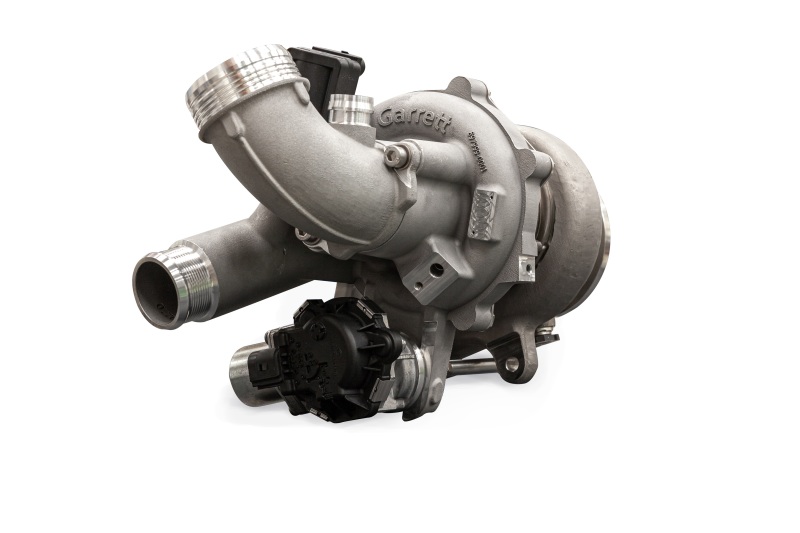
Water-cooled, fixed-geometry journal bearing turbo with Mar-M alloy turbine wheel, 47 mm compressor inducer, internal wastegate and electronic actuator included. V-band outlet, bolt-on inlet flange. Supports up to 485 hp (est.)
Ready to get more from your turbocharged Volkswagen or Audi? The Garrett PowerMax Stage 1 turbocharger is a factory-style upgrade built for 2014-2018 Volkswagen Golf, GTI and Golf R and Audi A3, S3, TT, TTS and Q3 applications, giving enthusiasts and tuners a bigger turbo without a custom build. It is based on Garrett's GT2260S design, pairing a 47 mm compressor inducer and 60 mm exducer to move more air than the stock unit, and it supports up to 485 horsepower when matched with the right supporting modifications and a proper tune. The hot side is made for demanding use, with a Mar-M alloy turbine wheel and a hot section rated to 1050°C for aggressive calibrations and hard driving. Inside, a journal bearing rotor group with a reinforced 360-degree thrust bearing and a water-cooled center housing helps manage the heat and loads of a tuned engine. The turbo comes with an internal wastegate and calibrated electronic actuator, a V-band turbine outlet and a bolt-on turbine inlet flange, so it mounts in the factory location without fabrication. A fully machined speed sensor port makes it easy to add shaft speed monitoring, with sensors sold separately. Garrett is trusted by OEMs around the world, and the PowerMax Stage 1 brings that engineering to your build, backed by a one-year warranty.
Turbocharger - Garrett PowerMax GT2260S Stage 1 - Water-Cooled w/ Actuator
Features and Benefits
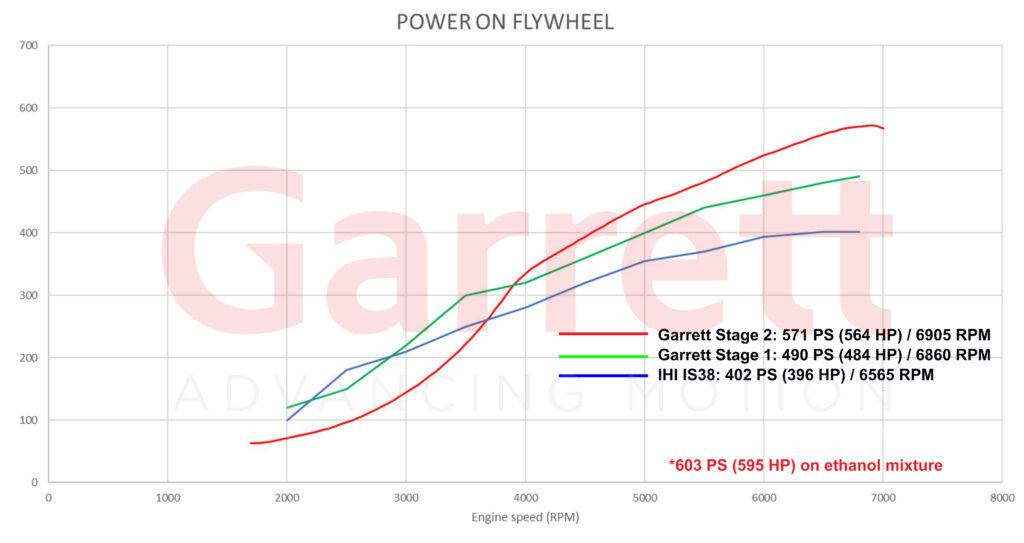
- Supports up to 485 horsepower, estimated from compressor choke flow, for a major step up in power potential over the factory turbo when paired with supporting modifications and a proper tune
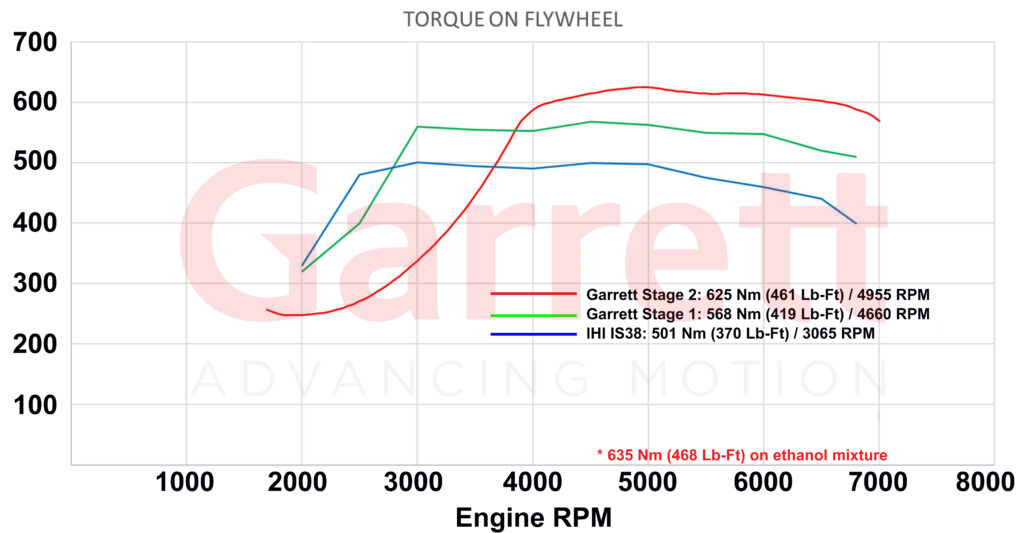
- GT2260S design with a 47 mm compressor inducer and GTX Gen II compressor wheel aerodynamics flows about 17% more than the IS38 turbo on a stock Golf R, delivering more airflow for added power
- Direct-fit design mounts in the factory location and bolts to the OEM manifold and inlet, so installation requires no fabrication
- Mar-M alloy turbine wheel and a hot section rated to 1050°C stand up to the exhaust heat of aggressive tunes and hard driving
- Latest-generation journal bearing system with a reinforced 360-degree thrust bearing is built to handle the shaft loads of a tuned engine running higher boost
- Water-cooled center housing carries heat away from the bearing system, helping control bearing temperatures during hard driving
- Internal wastegate with included calibrated electronic actuator keeps boost control integrated in the turbine housing, avoiding an external wastegate and extra plumbing
- Fully machined speed sensor port accepts a shaft speed sensor (sold separately) so you can monitor turbo speed and help protect your investment
- Backed by a 1-year Garrett warranty for added confidence in your performance upgrade
Applications
- 2015-2018 Audi A3 2.0L 4-Cylinder
- 2015-2016 Audi A3 1.8L 4-Cylinder
- 2015-2018 Audi A3 Quattro 2.0L 4-Cylinder
- 2014-2017 Audi Q3 Quattro 2.0L 4-Cylinder
- 2014-2018 Audi S3 2.0L 4-Cylinder
- 2014, 2016 Audi TT 2.0L 4-Cylinder
- 2014, 2016-2018 Audi TT 1.8L 4-Cylinder
- 2014-2018 Audi TT Quattro 2.0L 4-Cylinder
- 2014-2018 Audi TTS Quattro 2.0L 4-Cylinder
- 2014-2015 Volkswagen Golf 2.0L 4-Cylinder
- 2015-2018 Volkswagen Golf 1.8L 4-Cylinder
- 2015-2018 Volkswagen Golf R 2.0L 4-Cylinder
- 2014-2018 Volkswagen GTI 2.0L 4-Cylinder
Notes
Garrett Performance products are intended for racing vehicles that are never driven on public roads. Check applicable local, state and federal regulations before purchasing or installing this turbocharger on any street-driven vehicle.
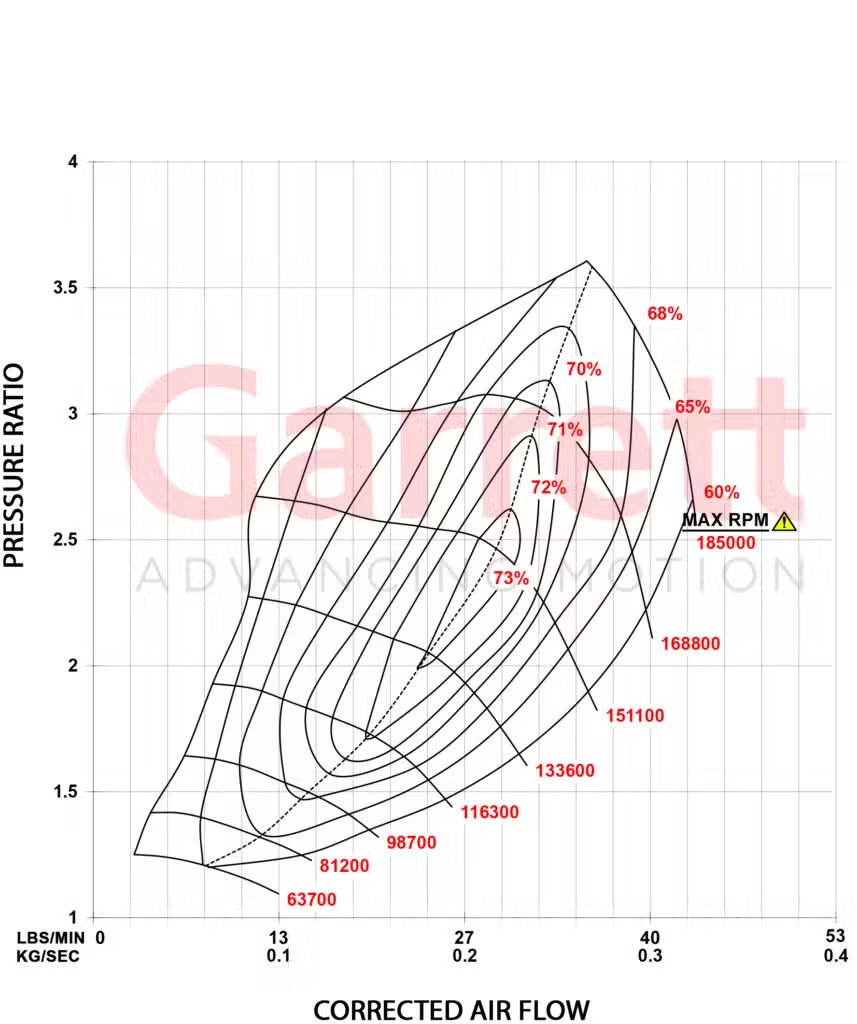
A tune is required. Operating this turbocharger without a proper engine calibration can cause overboost, excessive turbo speed and engine damage. Maximum turbo speed is 185,000 RPM; have a qualified tuner calibrate the vehicle before driving under boost.
The 485 hp maximum rating is estimated strictly from the choke flow of the compressor map (total turbo capability) and represents potential flywheel power. Performance results depend heavily on the vehicle's modifications and tuning/calibration.
Wastegate actuator included: this turbocharger uses an internal wastegate with an electronic actuator. The turbo speed sensor is not included and is sold separately; the housing has a fully machined speed sensor port.
ACES fitment covers 2014-2018 Volkswagen Golf, GTI and Golf R and Audi A3, A3 Quattro, S3, TT, TT Quattro, TTS Quattro and Q3 Quattro (2014-2017) with 1.8L or 2.0L 4-cylinder engines. Model-year and engine coverage varies by model, so confirm your vehicle against the fitment guide before ordering.
Specifications: Garrett GT2260S, fixed geometry, journal bearings, water-cooled center housing, 47 mm compressor inducer, 60 mm compressor exducer, 45 mm turbine exducer, hose barb compressor outlet, V-band turbine outlet flange, bolt-on turbine inlet flange, uncoated raw cast finish.
This turbocharger carries a 1-year warranty. Contact Garrett or your seller for coverage details and terms.
Designed to mount in the factory turbo location and bolt to the factory manifold and inlet; no fabrication is required.
This water-cooled turbo needs oil feed, oil drain and coolant connections. Verify each line is clean, correctly routed and sealed before the first start, and that the oil drain has an unobstructed, downward path back to the oil pan.
The calibrated electronic wastegate actuator is included. Confirm its wiring connection and operation with the vehicle's calibration before driving under boost.
Technical Tips
Getting dependable results from a Garrett PowerMax Stage 1 turbocharger starts before the first boost and continues through tuning and ongoing monitoring. This unit is a water-cooled, journal bearing design with an internal wastegate and an electronic actuator, so its service life depends on clean oil, steady coolant circulation and a calibration that keeps the turbo inside its operating limits. The technical tips below cover preparing the oil and coolant supply, priming the bearings before the first start, exhaust and charge-pipe connections, tuning and calibration of the electronic actuator, and the monitoring practices that help a higher-output engine stay within the turbo's maximum speed. Whether you are a professional tuner or an experienced DIY installer, taking the time to follow these recommendations helps protect the turbocharger, the engine it feeds and the effort invested in the build.
Flush or replace the engine oil and filter before installing the turbo. Debris or contaminated oil can quickly damage journal bearings, so also confirm the oil feed passage is clean and free of restrictions.
Inspect the oil feed line, oil drain path and coolant lines for kinks, sludge or restrictions and replace any that are damaged. This water-cooled turbo depends on both oil and coolant flow to protect its bearings.
Prime the turbo with clean engine oil through the oil inlet and turn the rotor by hand before installation so the bearings are never run dry on first start-up.
Seat the V-band turbine outlet flange squarely against the downpipe and tighten the clamp evenly. Exhaust leaks at this joint can upset boost control and spool and are easier to fix before the vehicle is lowered.
Check the compressor outlet hose barb connection and all charge piping for secure clamps and clean mating surfaces; boost leaks reduce performance and can make tuning data misleading.
Install a turbo speed sensor in the machined port (sold separately) and log shaft speed during tuning. Maximum turbo speed is 185,000 RPM, so keep logged speed below that limit.
Have the vehicle calibrated by an experienced tuner, including electronic actuator control and datalogging. The 485 hp rating is estimated from compressor choke flow, so actual results depend on your modifications and tune.
Monitor boost, intake air temperature and exhaust gas temperature during the first drives after tuning, and recheck oil, coolant and exhaust connections for leaks after the first few heat cycles.
After hard driving, allow a short cooldown idle before shutting the engine off so oil and coolant can carry heat away from the turbo center housing.
⚠️ California Proposition. This product contains chemicals known to the state of California to cause cancer and birth defects or other reproductive harm. For more information: https://www.p65warnings.ca.gov/