Product Description
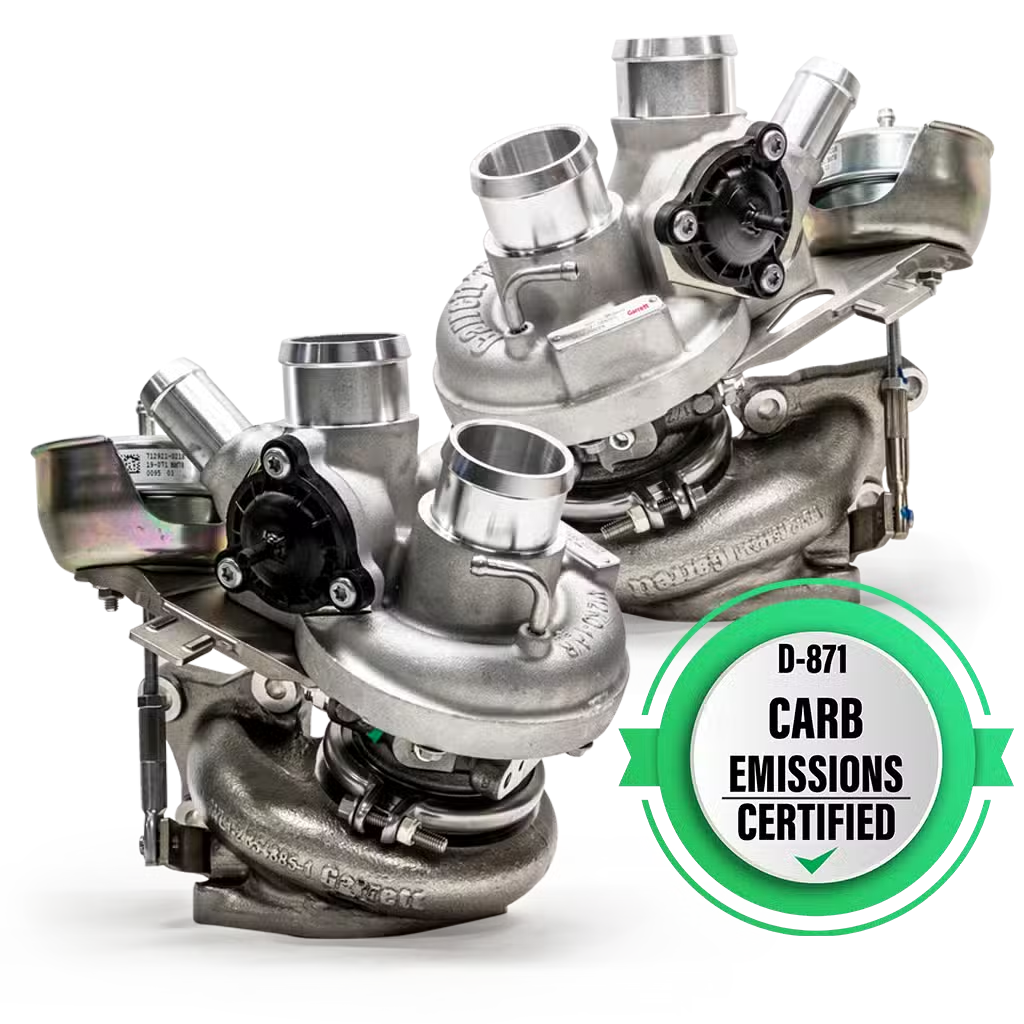
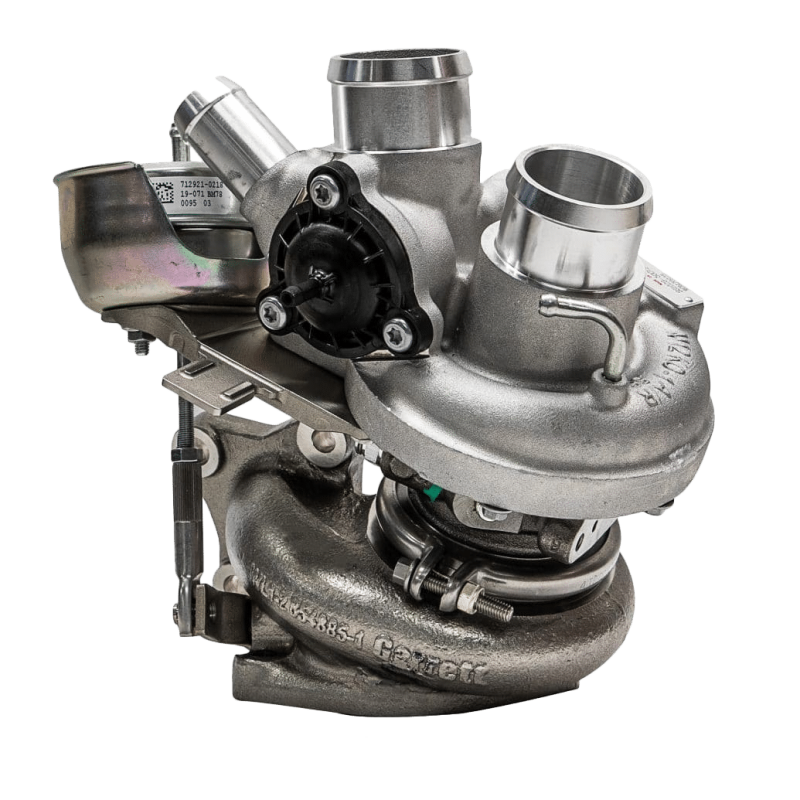
Single-scroll turbocharger with cast iron turbine housing and aluminum compressor housing. Includes wastegate actuator. Right-side unit with uncoated housings, designed for 3.5L V6 Ford and Lincoln truck applications.
When a turbocharger wears out or an engine is ready for more, the replacement you choose determines how the engine breathes for the miles ahead. The Garrett 881028-5002S is a performance-grade, single-scroll turbocharger built for the right side of select Ford F-150, Ford Expedition, and Lincoln Navigator models powered by the 3.5L V6. Garrett is a dedicated turbocharger manufacturer, and this unit pairs a cast iron turbine housing on the hot exhaust side with a lightweight aluminum compressor housing on the intake side. An internal wastegate manages boost within the turbine housing, and the wastegate actuator is included, so the boost-control hardware arrives with the turbo instead of as a separate purchase. Both housings are left uncoated, with a silver compressor housing and a gunmetal gray turbine housing. It is listed for 2011-2016 F-150 and 2015-2017 Expedition and Navigator applications with the 3.5L V6, giving shops and owners a single right-side turbo solution across several popular Ford and Lincoln platforms. Choose the Garrett 881028-5002S when you want performance-grade turbocharger hardware from a company whose business is boost.
Turbocharger, Right Side - Single Scroll, Internal Wastegate w/ Actuator
Features and Benefits
- Performance-grade turbocharger from Garrett, a dedicated turbo manufacturer, gives 3.5L V6 owners purpose-built boost hardware for the right-side position
- Internal wastegate integrates boost control into the turbine housing, eliminating the need for a separate external wastegate and its plumbing
- Wastegate actuator is included, so the boost-control hardware arrives with the turbo and there is no need to source the actuator separately
- Cast iron turbine housing withstands the sustained exhaust-gas heat on the hot side of the turbo for long service life under boost
- Aluminum compressor housing provides a lightweight, corrosion-resistant cold side for dependable long-term operation
- Single-scroll turbine design uses a straightforward exhaust-flow path that suits the one-turbo-per-bank layout of the 3.5L V6 engine
- Applications cover 2011-2016 F-150 plus 2015-2017 Expedition and Navigator with the 3.5L V6, so one right-side turbo serves several Ford and Lincoln platforms
Applications
- 2011-2016 Ford F-150 3.5L V6
- 2015-2017 Ford Expedition 3.5L V6
- 2015-2017 Lincoln Navigator 3.5L V6
Notes
Turbochargers and exhaust components remain extremely hot after the engine is shut off and can cause severe burns. Allow the engine and exhaust system to cool completely before removing or installing the turbocharger, and wear protective gloves.
Never operate the engine with the air intake or charge-air piping disconnected. The spinning compressor wheel can cause injury, and debris drawn into the compressor can severely damage the turbocharger.
Engine oil and coolant may spill when lines are disconnected during turbocharger service. Wear eye protection and gloves, catch all fluids, clean up spills promptly, and dispose of used fluids according to local regulations.
This listing is for the right-side turbocharger only. The 3.5L V6 uses one turbocharger per cylinder bank, so the left-side turbocharger is a separate part and is not included.
Fitment is listed for 2011-2016 Ford F-150, 2015-2017 Ford Expedition, and 2015-2017 Lincoln Navigator, all with the 3.5L V6 engine (213 CID). Confirm the vehicle has this engine before ordering.
Mounting gaskets, hardware, and oil and coolant lines are not listed as included with this turbocharger. Confirm what is needed for your vehicle and source any additional parts before starting the job.
Compare the replacement turbocharger with the removed unit before installation, checking flange shapes, oil port locations, and wastegate actuator position, to confirm it is the correct right-side part.
Remove all old gasket material from the mating surfaces and use new gaskets and seals at the turbo flanges and oil and coolant connections. Reused gaskets can leak exhaust, oil, or coolant.
Keep the compressor inlet and outlet, the turbine openings, and the oil ports covered until the moment each connection is made so that dirt and debris cannot enter the turbocharger.
Tighten the turbocharger mounting fasteners and all line connections to the vehicle manufacturer's torque specifications, and replace any single-use or damaged fasteners as the service procedure directs.
Technical Tips
A turbocharger replacement is only as successful as the preparation behind it. Turbochargers spin at very high speeds on a thin film of engine oil, so the condition of the oil supply, the oil drain path, and the intake and exhaust systems around the turbo matter as much as the turbo itself. The technical tips below cover the topics that most often separate a lasting turbo installation from a repeat failure: finding the root cause of the original problem, preparing and pre-lubricating the new unit, checking oil feed and drain paths and the intake tract, and verifying the installation after the first start. They apply to the Garrett 881028-5002S right-side turbocharger on 3.5L V6 Ford F-150, Expedition, and Lincoln Navigator applications and are meant to supplement, not replace, the vehicle manufacturer's published service procedure. Because this unit includes its wastegate actuator and an internal wastegate, handle the assembly carefully and keep all connections clean and secure. Whether you are a professional technician avoiding comebacks or a DIY installer doing the job once, following these guidelines helps protect the new turbo and supports reliable boost for the long term.
Identify and correct the root cause of the original turbo failure, such as oil contamination, oil starvation, or intake leaks, before installing the new unit or the replacement may fail the same way.
Check that the oil feed line and oil drain path are clean, free of restriction, and undamaged; a blocked oil supply or drain can quickly damage a turbocharger.
Inspect the intake tract and charge-air piping for debris, cracked hoses, and loose clamps; foreign objects can damage the compressor wheel and leaks reduce boost.
Replace the engine oil and filter during installation so the new turbo bearings run on clean oil; dirty oil is a common cause of premature turbocharger failure.
Pre-lubricate before the first start by pouring clean engine oil into the oil inlet and turning the compressor wheel by hand, so the bearings are not dry during initial cranking.
After installation, start the engine and let it idle briefly so oil pressure builds, then inspect all oil, coolant, and exhaust connections for leaks before road testing.
Allow the engine to idle briefly before shutting it down after hard driving so the turbocharger can shed heat while oil is still circulating.
⚠️ California Proposition. This product contains chemicals known to the state of California to cause cancer and birth defects or other reproductive harm. For more information: https://www.p65warnings.ca.gov/