Product Description
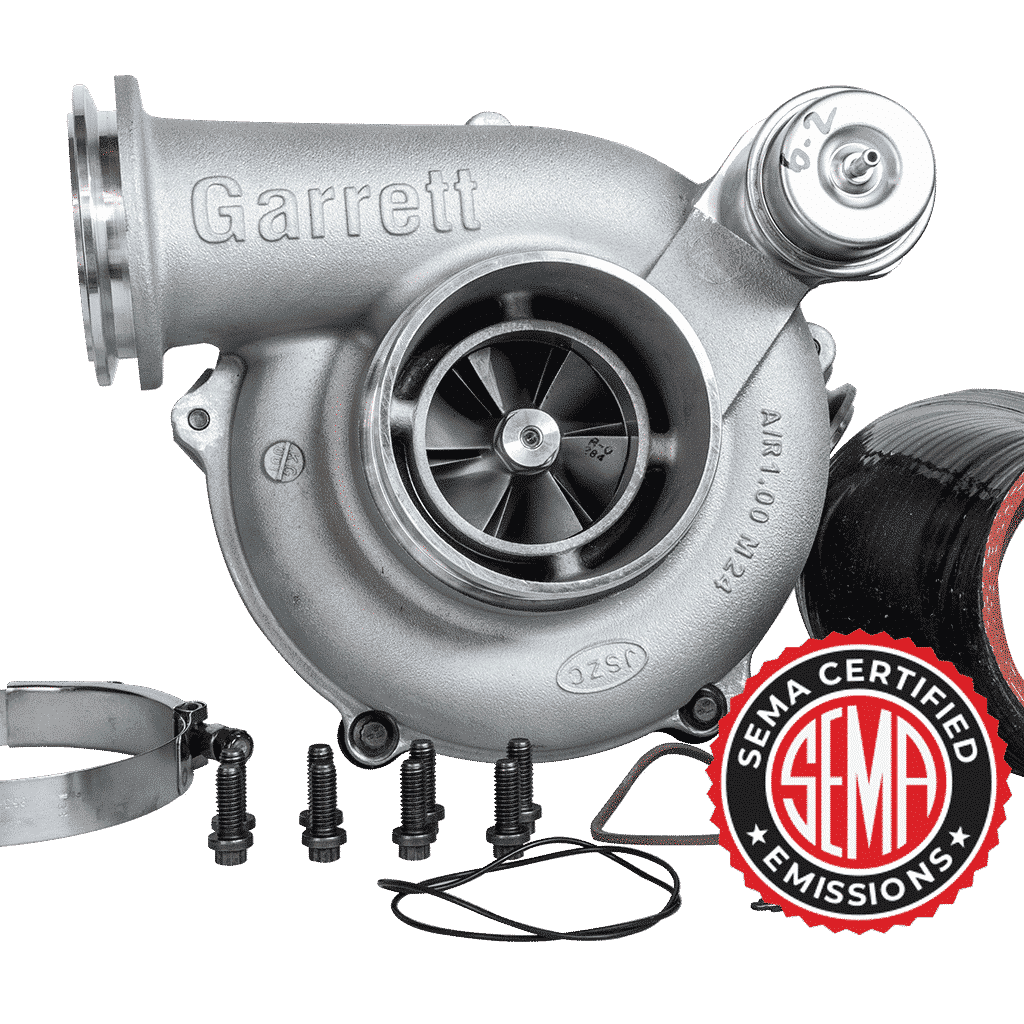
Ball bearing turbocharger upgrade with 88 mm aluminum compressor wheel, cast iron 1.00 A/R turbine housing and internal wastegate actuator. Includes 4-inch inlet hose, V-band clamp and oil o-rings. Oil lines not included.
The factory turbocharger on a 7.3L Power Stroke handles stock power well, but add injectors, a hotter tune or a heavy trailer and its journal and thrust bearing design becomes the limit. The Garrett PowerMax GTP38R is a direct-replacement turbocharger upgrade for 1999.5-2003 Ford F-250 and F-350 Super Duty trucks and 2000-2003 Excursions with the 7.3L Power Stroke diesel, and it supports up to 590 horsepower. At its core is a Garrett ball bearing cartridge that eliminates the thrust bearing, helping the turbo spool quickly, run efficiently and stay durable as boost climbs. An 88 mm aluminum compressor wheel moves more air than the factory 80 mm wheel, while the cast iron 1.00 A/R turbine housing keeps exhaust restriction and backpressure in check to help lower exhaust gas temperatures under load. The internal wastegate comes with its actuator, and the turbo ships with a 4-inch inlet hose, V-band clamp and oil o-rings so you are not sourcing common connection hardware. A one-year warranty backs the purchase. Whether you tow heavy, run a hot tune or are building a high-horsepower 7.3L, the GTP38R pairs Garrett engineering with the airflow to back it up.
Garrett GTP38R Turbocharger - Ball Bearing - Ford 7.3L Power Stroke
Features and Benefits
- Garrett ball bearing cartridge eliminates the stock thrust bearing, a common failure point at high boost, so the turbo spools quickly and holds up when you turn up the boost
- 88 mm aluminum compressor wheel flows 33% more air than the stock 80 mm wheel, supporting up to 590 horsepower
- 1.00 A/R cast iron turbine housing reduces exhaust restriction and backpressure, lowering exhaust gas temperatures by up to 200°F to help protect pistons, valves and the turbo
- Rated for up to 40 psi of boost, leaving room to grow with injector and tuning upgrades
- Internal wastegate with included actuator means no separate wastegate or actuator purchase is needed to complete the installation
- Direct-replacement design with V-band compressor outlet and bolt-on turbine outlet flange fits 1999-2003 F-250/F-350 Super Duty and 2000-2003 Excursion 7.3L trucks for a straightforward bolt-in upgrade
- Includes the 4-inch inlet hose, V-band clamp and oil inlet and outlet o-rings, so common connection hardware does not need to be sourced separately
- Backed by a 1-year warranty for added confidence in your 7.3L Power Stroke upgrade
Applications
- 1999-2003 Ford F-250 Super Duty 7.3L V8 Power Stroke
- 1999-2003 Ford F-350 Super Duty 7.3L V8 Power Stroke
- 2000-2003 Ford Excursion 7.3L V8 Power Stroke
Notes
Turbochargers and the exhaust components around them reach extremely high temperatures during operation. Allow the engine and exhaust system to cool completely before handling or installing to avoid severe burns.
Garrett Performance products are intended for racing vehicles that are never driven on public roads. Installing this turbocharger on a street-driven truck may violate emissions regulations; confirm legality and emissions compliance for your state or region before purchasing or installing.
Fits 1999-2003 Ford F-250 Super Duty and F-350 Super Duty and 2000-2003 Ford Excursion equipped with the 7.3L (445 CID) V8 Power Stroke diesel engine. Verify your truck's engine and model year before ordering.
Not included: oil supply line, oil drain line, coolant supply line and coolant drain line. Purchase any needed lines separately and inspect existing lines before reuse.
The 590 horsepower figure is an estimate. Actual results depend on your truck's modifications, fueling and tuning.
Fixed-type turbocharger with an internal wastegate. Compressor housing is uncoated cast aluminum (silver) and turbine housing is uncoated cast iron (iron gray); the compressor wheel is aluminum.
Oil supply and drain lines are not included. Inspect the existing lines and fittings and replace any that are kinked, restricted, leaking or carbon-fouled so the turbo receives oil and can drain freely.
The compressor outlet uses a V-band connection and the turbine outlet uses a bolt-on flange. Confirm the charge pipe and downpipe mating connections are compatible and fully seated before running the engine.
Install the included 4-inch inlet hose on the compressor inlet and secure it with appropriate clamps so all intake air passes through the air filter; unfiltered air can damage the compressor wheel.
Technical Tips
A ball bearing turbocharger rewards careful installation. The GTP38R spins at very high speed on a thin film of clean engine oil, so the quality of the oil feed, the cleanliness of the intake tract and the condition of the drain path matter as much as the turbo itself. The technical tips below cover what to check before the old turbo comes off, how to prepare the new unit and its connections, and what to verify at first start-up and during early use. Because oil supply and drain lines are not included, plan to inspect or replace them as part of the job. If the original turbo failed, finding the root cause before installing the replacement is the best way to protect your investment. If you plan to push this turbo toward its 590 horsepower rating, watching boost and exhaust gas temperature will help you stay within safe limits. Use these tips alongside Garrett's installation instructions and the Ford service procedure for your truck.
If replacing a failed turbo, identify the cause first, such as contaminated oil, a restricted oil feed or drain, or intake debris, so the new turbo is not damaged by the same problem.
Inspect the intake tract, charge pipes and air filter and remove any debris before installation; even small particles can damage a compressor wheel spinning at turbo speeds.
Verify the oil supply and drain lines are clean, unrestricted and leak-free; a restricted drain can cause oil to back up into the turbo and leak past the seals.
Change the engine oil and filter at installation; clean oil is the lifeblood of a ball bearing cartridge and protects it from contamination that causes early wear.
Pre-fill the turbo's oil inlet with clean engine oil before connecting the supply line so the bearings are lubricated at first start-up.
Install the included oil inlet and outlet o-rings and make sure the sealing surfaces are clean and free of old gasket or o-ring material to prevent oil leaks.
Seat the 4-inch inlet hose, V-band clamp and charge pipe connections fully and check them for leaks; boost leaks reduce performance and can raise exhaust gas temperatures.
After installation, let the engine idle briefly and confirm oil pressure, then inspect the oil, exhaust and boost connections for leaks before driving.
Monitor boost and exhaust gas temperature with gauges when increasing fuel or boost so you can stay within safe limits for the truck and the turbo.
After hard towing or pulls, let the engine idle briefly before shutdown so the turbo can cool and oil circulation protects the bearing cartridge.
⚠️ California Proposition. This product contains chemicals known to the state of California to cause cancer and birth defects or other reproductive harm. For more information: https://www.p65warnings.ca.gov/